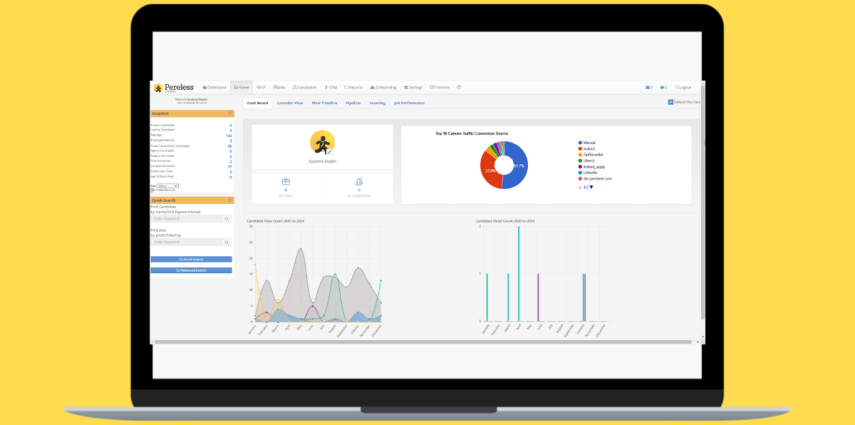
14 Recruiting Metrics Your Hiring Team Should Know

In today’s competitive talent landscape, tracking the right metrics isn’t just smart—it’s essential for optimizing your hiring strategy and driving business results. But sifting through spreadsheets? Forget it. Pereless Systems’ Ad-Hoc Reporting empowers your team with drag-and-drop customization, real-time dashboards, and seamless integrations to turn raw data into hiring superpowers. Tailored for enterprise businesses, our affordable platform makes compliance, efficiency, and ROI a breeze.

In this guide, we’ll unpack 14 key recruiting metrics powered by Pereless Systems reports—from time to fill to skill testing outcomes. For each, we’ll cover what it measures, why it matters, and how our tools supercharge your insights. Let’s get your hiring data working harder.

1. Time to Fill

Measures days from job requisition to offer acceptance. Why track it? Averages hit 42 days in 2025, delaying revenue and productivity—especially in high-demand fields like tech (up to 60 days).

Pereless Systems edge: Our time-to-fill report timestamps every stage, flagging bottlenecks with automated alerts for faster fills.

2. Cost Per Hire

Total recruitment expenses (internal + external) divided by hires. Why track it? Global benchmarks sit at $4,300 per hire, but inefficiencies can inflate this by 20%.

Pereless Systems edge: This report displays costs that have been recorded within the hired screen. A great report to track hired information, this report also displays any custom fields that have been created in My Settings and recorded on the hiring screen.

3. Candidate Source

Breakdown of where applicants originate (e.g., job boards, social). Why track it? Job boards drive 60% of volume, but referrals yield 4x higher quality hires in 2025 data.

Pereless Systems edge: Source tagging in applicant tracking feeds into customizable reports, ranking channels by conversion for smarter spend.

4. Candidate Referral

Number and success rate of employee-referred candidates. Why track it? Referrals boast 30% faster time-to-hire and 45% lower costs, outpacing other sources.

Pereless Systems edge: Dedicated referral tracking in our pipeline reports incentivizes programs, with email automation for quick thank-yous.

5. Offer Approval

Rate of offers accepted by candidates (or internal approvals). Why track it? 2025 averages are 69%, but top teams hit 90%—dips signal pay gaps or poor experience.

Pereless Systems edge: Offer workflow reports log acceptance data, with trends visualized to refine negotiation tactics.

6. Prescreening Questions

Response rates and qualification yields from initial screening queries. Why track it? Effective prescreens filter 70% of unfit applicants early, cutting interview waste by 25%.

Pereless Systems edge: Built-in questions in job applications generate pass/fail analytics, optimizing for role-specific fits.

7. Total Candidates/Job Summary

Applicants per role, including qualified vs. total volume. Why track it? 2025 sees 180+ apps per opening on average—high volume doesn’t always mean quality.

Pereless Systems edge: Job summary reports aggregate per posting, with filters for diversity and source to refine postings.

8. Conversion Rate

Percentage of candidates advancing through funnel stages (e.g., apply-to-interview). Why track it? Industry average: 3% from apply to interview—leaks here cost 20% more in extended cycles.

Pereless Systems edge: Funnel visuals in recruitment activity reports highlight drop-offs, triggering automated re-engagement emails.

9. Resource ROI

Return on investment for recruiters (e.g., hires per recruiter or revenue generated). Why track it? Top performers average 1 hire/week, yielding 2x ROI—key for scaling teams.

Pereless Systems edge: Resource allocation reports tie activity to outcomes, benchmarking against industry standards for workload tweaks.

10. EEO Applicant

Demographic data on applicants for Equal Employment Opportunity compliance. Why track it? 2025 mandates show 40% of firms facing audits—accurate tracking ensures diversity goals (e.g., 30% underrepresented hires).

Pereless Systems edge: Automated EEO reports anonymize and aggregate data, exporting OFCCP-ready files with one click.

11. Job Status/Recruitment Activity

Pipeline progression and activity logs per role. Why track it? Stagnant statuses affect 35% of roles, inflating time-to-fill by 15 days.

Pereless Systems edge: Shows recruitment activity including job resource information, number of hires/openings to a single requisition. Also includes the total number of days a job has been open and a total average of all open jobs. Days open = date posted to report date.

12. Do Not Hire

Reasons for candidate disqualifications (e.g., skills mismatch). Why track it? Common pitfalls like cultural fit issues recur in 25% of rejections—spotting patterns prevents repeat errors.

Pereless Systems edge: Tag-based rejection reports analyze trends, feeding into prescreening to block issues upstream.

13. Agency Summary

Performance metrics for external agencies (e.g., submissions-to-hire ratio). Why track it? Agencies fill 20% of roles but vary wildly—top ones deliver 2x faster at 15% lower cost.

Pereless Systems edge: Vendor-specific summaries score agencies on quality and speed, streamlining contract renewals. Returns a list of candidates that have been sent through the agency.

14. Skill Testing Report

This report allows you to easily view iSkill responses at the click of a button and on one page. Why track it? 60% of hires fail due to skills gaps—tracking boosts quality of hire by 25%.

ATS OnDemand edge: Integrated testing modules generate score distributions, correlating with performance for hiring.

*Recently, Pereless Systems launched their AI mascot named Bradford! Bradford has over 25 years of talent management experience. After every blog, Bradford will provide his expertise in the intricate world of talent management software like never before.*

What Would Bradford Do?

These 14 metrics, supercharged by Pereless Systems reporting suite, aren’t just checkboxes—they’re your roadmap to reducing costs by 30%, accelerating fills, and ensuring compliant, equitable hiring. Our platform’s seamless HR integrations and mobile access mean insights are always at your fingertips, no PhD required.

Ready to track like a pro? Book a free demo today! Which metric will you tackle first? 

Pereless Systems: Affordable, powerful enterprise ATS for teams that hire to thrive.

Sources:

https://www.gem.com/blog/10-takeaways-from-the-2025-recruiting-benchmarks-report

https://juicebox.ai/blog/recruiting-metrics

https://www.linkedin.com/pulse/state-us-recruiting-20242025-key-hiring-metrics-pharma-alex-benjamin-neuje


https://www.aihr.com/blog/recruiting-metrics/

https://www.crosschq.com/blog/ultimate-list-recruiting-benchmarks

https://iprospectcheck.com/recruitment-metrics/


https://recruiterflow.com/blog/recruiting-metrics/

https://www.shrm.org/content/dam/en/shrm/research/2025-recruiting-benchmarking-report.pdf

https://www.smartrecruiters.com/resources/article/united-states-benchmark-recruiting-metrics/ 

Data-Driven Hiring: Using Analytics to Make Better Hiring Decisions

In today’s competitive talent landscape, hiring decisions can no longer rely on gut feelings and outdated methods. Companies that want to attract and retain top talent need to make smarter, faster, and more informed hiring decisions. That’s where data-driven hiring comes in.

By leveraging analytics, organizations can transform their hiring process into a strategic advantage — improving quality of hire, reducing time-to-fill, and ultimately aligning recruitment with business goals.

What is Data-Driven Hiring?

Data-driven recruitment is the process of using data, metrics, and analytics to guide hiring decisions. It involves collecting and analyzing data from various stages of the recruitment funnel from sourcing and screening to interviews and onboarding  to identify trends, improve efficiency, and make evidence-based decisions.

Rather than relying on intuition or assumptions, data-driven recruitment empowers talent acquisition teams with actionable insights.

Why Data-Driven Hiring Matters

1. Improved Quality of Hire:

By analyzing historical data on high-performing employees, recruiters can identify the traits, experiences, and skills that correlate with success — and target candidates who match that profile.

2. Reduced Time-to-Hire:

Data helps pinpoint bottlenecks in the hiring process. Are candidates dropping off at the interview stage? Is the sourcing strategy ineffective? Identifying these issues can speed up hiring timelines without sacrificing quality.

3. Enhanced Candidate Experience:

Metrics such as application drop-off rates or candidate satisfaction scores (via surveys) can highlight where the experience is falling short, allowing recruiters to optimize communication and engagement.

4. Bias Reduction:

Analytics can help spot and reduce unconscious bias by standardizing evaluations and identifying patterns of discrimination in hiring decisions.

5. Cost Optimization:

Hiring costs add up quickly. By tracking cost-per-hire, source effectiveness, and recruiter efficiency, companies can optimize budget allocation and reduce unnecessary spending.

Key Metrics in Data-Driven Hiring

To make the most of analytics, here are some core metrics you should be tracking:

  • Time to Fill: How long it takes to fill a role from job posting to offer acceptance.

  • Cost per Hire: Total recruiting costs divided by the number of hires.

  • Source of Hire: Which platforms or channels are yielding the best candidates.

  • Quality of Hire: Performance and retention of new hires, often measured after 6–12 months.

  • Applicant Drop-off Rate: How many applicants abandon the application process.

  • Interview-to-Offer Ratio: Number of interviews needed to make an offer.

  • Diversity Metrics: Demographics of candidates at each recruitment stage.

How to Implement Data-Driven Hiring

1. Set Clear Goals

Start with clear recruitment objectives. Are you trying to reduce turnover? Increase diversity? Improve hiring speed? Your goals will determine which data to collect and analyze.

2. Leverage the Right Tools

Invest in technology that enables data collection and analysis. Common tools include:

  • Applicant Tracking Systems (ATS)

  • Recruitment Marketing Platforms

  • HR Analytics Software

  • AI Screening Tools

3. Integrate Your Data Sources

Siloed data limits insight. Ensure your recruitment data can be integrated across platforms — from sourcing tools to onboarding systems.

4. Train Your Team

Recruiters and hiring managers need to understand how to interpret and act on recruitment data. Provide training on using analytics tools and reading key metrics.

5. Test and Iterate

Use A/B testing for job descriptions, interview formats, or sourcing channels to see what works best. Continuously refine your approach based on what the data reveals.

Real-World Example

A fast-growing tech company struggling with high turnover among new hires used data analytics to evaluate their hiring process. They found that candidates hired through employee referrals had higher performance scores and longer tenure than those sourced through job boards. By reallocating budget and focus to referral programs and using structured interviews to assess fit more accurately, they reduced first-year attrition by 25%.

Bradford’s Key Takeaway:

In a world where talent is one of the biggest differentiators for business success, relying on instinct is no longer enough. Data-driven hiring provides the clarity, efficiency, and strategic advantage modern organizations need to attract and retain the right people.

Whether you’re a startup hiring your first few employees or an enterprise scaling globally, the message is clear: hiring smarter starts with your data.

Best Practices & Processes For Recruiters: Mastering Communication and Technology

In today’s competitive job market, recruiters play a pivotal role in connecting top talent with the right opportunities. To stand out, recruiters must master job descriptions, leverage active listening, employ effective communication strategies, utilize innovative tools & technologies, and foster diversity & inclusion in communication. These best practices not only streamline the recruitment process but also create a positive candidate experience that drives successful hires.


Crafting Accurate and Engaging Job Descriptions


The foundation of any effective recruitment process starts with job descriptions. Clear, concise, and comprehensive job descriptions attract the right candidates while minimizing misunderstandings about role expectations. When creating job descriptions, recruiters should focus on:

  • Highlighting essential responsibilities and qualifications.
  • Using inclusive language to appeal to a diverse candidate pool.
  • Emphasizing company culture and values to resonate with applicants.


Optimized job descriptions also improve SEO, making it easier for candidates to find openings through search engines and job boards.


Harnessing Active Listening in Candidate Interactions


Active listening is a critical communication strategy that helps recruiters better understand candidate motivations, skills, and concerns. By attentively engaging in conversations, recruiters can:

  • Build stronger rapport and trust with candidates.
  • Identify underlying candidate strengths or reservations.
  • Tailor communication to meet individual needs.


Active listening goes beyond simply hearing words—it involves asking clarifying questions, reflecting back what was said, and demonstrating empathy throughout the recruitment journey.


Implementing Effective Communication Strategies


Transparent and timely communication is key to keeping candidates engaged and informed. Best practices include:

  • Setting clear expectations about recruitment timelines.
  • Providing constructive feedback regardless of the hiring outcome.
  • Maintaining consistent touchpoints via email, phone, or messaging platforms. 

This approach reduces candidate anxiety and enhances the employer brand’s reputation. Furthermore, adopting communication strategies that are respectful and culturally sensitive supports better inclusion.


Leveraging Innovative Tools & Technologies


Modern recruitment relies heavily on technology to increase efficiency and accuracy. Recruiters should embrace solutions such as:

  • Applicant Tracking Systems (ATS) to organize candidate data and streamline workflows.
  • AI-powered tools for resume screening and candidate matching.
  • Video interviewing platforms that facilitate remote assessments.
  • Collaborative software that enables seamless teamwork among hiring managers. 

By integrating these technologies, recruiters can reduce manual tasks, focus on meaningful candidate engagement, and make data-driven decisions.


Promoting Diversity & Inclusion in Communication


Diversity & inclusion (D&I) are essential elements of successful recruitment. Effective communication that respects varying backgrounds fosters an inclusive hiring environment. Recruiters should:

  • Use bias-free language in all communications and job postings.
  • Ensure interview panels represent diverse perspectives.
  • Provide accessibility accommodations for candidates when needed.
  • Encourage and listen to feedback on improving inclusion efforts. 

Creating an atmosphere where all candidates feel valued not only broadens the talent pool but also enhances organizational innovation and culture.

*Recently, Pereless Systems launched their AI mascot named Bradford! Bradford has over 25 years of talent management experience. After every blog, Bradford will provide his expertise in the intricate world of talent management software like never before.*


What Would Bradford Do?


Recruiters who combine well-crafted job descriptions, active listening, strategic communication, cutting-edge tools, and a commitment to diversity & inclusion will elevate their recruitment outcomes. These best practices and processes build trust, optimize candidate experience, and ultimately secure the right talent for companies. By continually refining these areas, recruiters position themselves and their organizations for sustained hiring success in an ever-evolving job market.

How Franchise Owners Can Transform Hiring with an ATS: Top Strategies for 2025

In today’s fast-paced business world, franchise owners face unique challenges when it comes to recruiting top talent. From managing multiple locations to ensuring consistent hiring standards, the recruitment process can quickly become overwhelming. Fortunately, recruiting software combined with an Applicant Tracking System (ATS) offers a game-changing solution. By leveraging these tools, franchise owners can streamline hiring, improve candidate quality, and grow their businesses efficiently.


Why Franchise Owners Need Recruiting Software with an ATS


Franchise businesses often operate across various cities or states, making centralized hiring difficult. Without a standardized process, franchise owners risk inconsistent candidate evaluation, prolonged vacancy periods, and increased costs. Recruiting software equipped with an ATS addresses these challenges by automating and organizing the entire recruitment lifecycle.


An ATS simplifies candidate sourcing, screening, and communication—ensuring the best hires are made quickly. It offers features such as resume parsing, interview scheduling, and reporting capabilities, all accessible through a centralized platform. This not only saves time but also enhances collaboration among franchise managers.


Key Benefits of Using Recruiting Software with an ATS for Franchises


Streamlined Hiring Process: Automate repetitive tasks like posting job openings and filtering resumes. This allows franchise owners to focus on interviewing and onboarding top candidates.

Centralized Candidate Database: Maintain a robust pool of talent accessible by all franchise locations, enabling quick hiring when positions open.

Consistent Hiring Standards: Use customizable templates and workflows to standardize recruitment criteria across all franchises, ensuring quality hires.

Improved Candidate Experience: Automated communication keeps applicants informed at every stage, boosting your employer brand.

Data-Driven Decisions: Generate insightful reports on recruitment metrics, helping franchise owners refine strategies and optimize hiring outcomes.


How to Choose the Right Recruiting Software and ATS


When selecting recruiting software with an ATS, franchise owners should consider:


Scalability: The system should grow with your franchise network.

Integration: Look for tools that seamlessly integrate with your existing HR and payroll systems.

User-Friendliness: A simple interface ensures franchise managers nationwide can use the software effectively.

Customization: Ability to tailor workflows and job postings specific to each franchise location.

Customer Support: Responsive support is crucial to address any operational issues promptly.

Recruiting software integrated with an ATS is no longer a luxury but a necessity for franchise owners aiming to hire efficiently and maintain high-quality standards across multiple locations. By automating recruitment tasks and centralizing candidate data, franchises can reduce time-to-hire, improve candidate quality, and ultimately drive business growth. Investing in the right ATS solution empowers franchise owners to build strong teams that reflect their brand’s values and commitment to excellence.

*Recently, Pereless Systems launched their AI mascot named Bradford! Bradford has over 25 years of talent management experience. After every blog, Bradford will provide his expertise in the intricate world of talent management software like never before.*


What Would Bradford Do?


Recruiting software integrated with an ATS is no longer a luxury but a necessity for franchise owners aiming to hire efficiently and maintain high-quality standards across multiple locations. By automating recruitment tasks and centralizing candidate data, franchises can reduce time-to-hire, improve candidate quality, and ultimately drive business growth. Investing in the right ATS solution empowers franchise owners to build strong teams that reflect their brand’s values and commitment to excellence.


Make the shift today and see how recruiting software can transform your hiring experience into a more efficient, effective, and enjoyable process. It’s time to save time and money while revolutionizing your recruitment efforts for a brighter business future!

The Benefits of White-Labeling an Applicant Tracking System for Your Business

In today’s competitive business landscape, leveraging technology to optimize recruitment processes can make all the difference. One powerful strategy companies are adopting is white-labeling an Applicant Tracking System (ATS). By integrating a branded ATS into your services, your business can save time and money, increase revenue potential, gain a competitive edge in the market, enhance brand recognition, and improve customer satisfaction and retention. Let’s explore how white-labeling an ATS offers these substantial benefits for your business.


Save Time and Money with Streamlined Recruitment


Managing recruitment manually or through multiple disconnected systems can be costly and time-consuming. White-labeling an ATS allows you to offer a seamless, automated hiring platform without investing heavily in development or ongoing maintenance. Since the technology is already built and tested by the provider, your business can save time and money by avoiding lengthy development cycles and expensive technical support. This efficiency means recruiters can focus more on identifying talent rather than handling administrative tasks.


Increase Revenue Potential by Offering More Value


Adding a white-labeled ATS to your suite of offerings opens up new revenue streams. Instead of solely providing recruitment consulting or staffing services, you’re now offering a complete, tech-enabled solution — all under your own brand. Providing a branded, robust ATS enables you to capitalize on revenue and upsell additional services, thereby increasing revenue potential. Your clients will appreciate the comprehensive approach, which adds tangible value to their hiring process, making your business indispensable.


Gain a Competitive Edge in the Market


With many businesses still struggling to modernize recruitment, offering a white-labeled ATS sets your brand apart from competitors. It positions your business as a tech-savvy, customer-focused solution provider. This advantage helps you capture a larger market share and retain clients eager to stay ahead in talent acquisition. By integrating cutting-edge recruitment technology under your brand, you gain a competitive edge in the market.


Enhance Brand Recognition Across Client Interactions


Using a white-labeled ATS means your clients interact with your brand throughout every stage of their hiring process. Unlike third-party solutions that dilute brand presence, a white-labeled platform underscores your identity. This consistent branding helps to enhance brand recognition, reinforcing your market reputation and building trust with clients. Over time, this heightened exposure leads to enhanced brand recognition, forging stronger relationships and greater loyalty from your clients.


Improve Customer Satisfaction and Retention


An intuitive and efficient ATS improves the overall hiring experience for your clients, reducing frustrations and speeding up their recruitment cycles. By providing a tool that delivers real results and a seamless user experience, your customers are more likely to be satisfied and stay loyal. This naturally leads to better customer satisfaction and retention, key drivers for long-term business growth.


Bradford’s Takeaway


White-labeling an Applicant Tracking System is more than just a tech upgrade—it’s a strategic business move. From saving time and money to increasing revenue potential, gaining a competitive edge, enhancing brand recognition, and boosting customer satisfaction and retention, the benefits are compelling. If your business is looking to elevate its recruitment offerings while reinforcing its brand in the marketplace, white-labeling an ATS is a smart investment. Embrace this opportunity and watch your business grow with a powerful, branded recruitment solution.