
Is Your Hiring Process Costing You Top Candidates?

Today’s hiring process is supposed to make recruiting easier. But for many companies, it’s doing the exact opposite.

Candidates are applying, interviewing, and then disappearing. Recruiters are overwhelmed with applications. Hiring managers are frustrated by slow processes and poor-fit candidates. And somewhere in the middle, great talent is getting lost.

The truth is, the hiring problem often isn’t a talent problem — it’s a process problem. (LinkedIn)

At Pereless Systems, we believe hiring should feel simple, human, and efficient for everyone involved.

The Modern Hiring Experience Is Broken

Many hiring teams rely on outdated workflows, disconnected systems, and overly complicated recruiting tools. Candidates often experience:

  • Long application processes
  • Poor communication
  • Confusing interview stages
  • Delayed feedback
  • “Black hole” applications with no response

Research and industry conversations continue to show that candidate experience directly impacts employer brand, engagement, and hiring success. (LinkedIn Business Solutions)

And candidates notice.

In online hiring communities, job seekers consistently describe frustration with slow communication, excessive automation, and hiring systems that feel impersonal or difficult to navigate. (Reddit)

The result? Companies lose qualified candidates before they ever make it to the offer stage.

Complexity Doesn’t Equal Better Hiring

Many ATS platforms promise more features, more automation, and more customization. But for enterprise companies, more complexity often creates more problems.

When recruiting software becomes difficult to implement, manage, or navigate, hiring teams spend more time fighting the system than engaging with candidates.

That’s why Pereless Systems was built differently.

Pereless Systems helps enterprise businesses simplify hiring while staying compliant and organized.

Instead of forcing companies into rigid workflows, Pereless Systems focuses on what hiring teams actually need:

  • Fast setup
  • Easy-to-use workflows
  • Automation without complexity
  • Real-time reporting and visibility
  • Seamless integrations
  • Compliance-focused hiring tools
  • A better experience for recruiters and candidates alike

Because hiring software should support your process — not slow it down.

Candidate Experience Is Now a Competitive Advantage

Today’s candidates evaluate your hiring process the same way customers evaluate your brand.

A slow or frustrating process can damage trust before someone even joins your company. Meanwhile, a streamlined, transparent hiring experience helps companies:

  • Improve candidate engagement
  • Reduce drop-off rates
  • Increase offer acceptance rates
  • Strengthen employer branding
  • Hire faster and more efficiently

According to LinkedIn Talent Solutions, improving candidate experience has become a top priority for hiring teams because it directly impacts recruiting outcomes and long-term hiring success. (LinkedIn Business Solutions)

The companies winning top talent today aren’t necessarily the biggest companies.

They’re the companies creating the best hiring experiences.

Simplify Hiring Without Sacrificing Compliance

For enterprise organizations, staying compliant while moving quickly can feel challenging.

Pereless Systems helps simplify that balance by giving hiring teams structured workflows, centralized candidate tracking, and tools designed to support organized, compliant hiring practices — without adding unnecessary complexity.

The goal isn’t to automate people out of the process.

The goal is to remove friction so recruiters and hiring managers can focus on what matters most: building relationships and hiring great people.

The Future of Hiring Is Simpler

Hiring doesn’t need to feel overwhelming.

The right ATS should help your team move faster, stay compliant, improve candidate experience, and make smarter hiring decisions — all while remaining easy to use.

That’s the Pereless Systems difference.

Simple. Streamlined. Built for enterprise teams.

Learn more about how Pereless Systems can help simplify your hiring process: Power.pereless.com

🚀 Experience Pereless Systems

Ready to simplify hiring while staying compliant? Book a free demo today to see Pereless Systems in action! Power.pereless.com
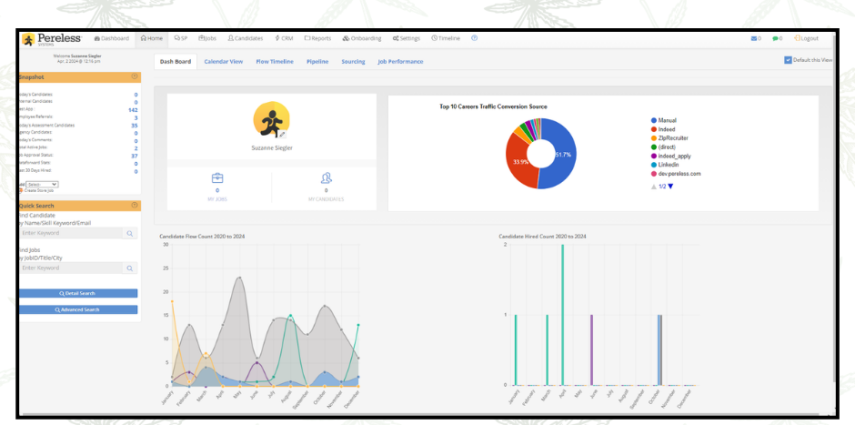
Enterprise Cannabis Recruiting Software: How Pereless Systems Simplifies Hiring in a Complex Industry

The cannabis industry isn’t just growing—it’s evolving under intense regulation, scrutiny, and operational pressure.

A recent reflection on five years of progress from New Jersey regulators highlights a clear shift: cannabis businesses are now expected to operate with greater accountability, transparency, and structure than ever before.

For hiring teams, that changes everything.

If you’re still relying on spreadsheets, inboxes, or disconnected tools to manage hiring, you’re not just inefficient—you’re exposed.

Here’s what’s changing—and how the right applicant tracking system (ATS) keeps you ahead.

Compliance Is Now Built Into Every Hire

Cannabis isn’t like other industries. Every decision—especially hiring—needs to stand up to scrutiny.

From documentation to fair hiring practices, regulators expect consistency and accountability.

The challenge: Manual hiring processes make it nearly impossible to track decisions, maintain records, and ensure compliance across roles and locations.

How Pereless Systems solves it:

  • Centralized candidate records
  • Built-in audit trails for every hiring decision
  • Standardized workflows that reduce risk

Bottom line: You don’t just need to hire—you need to prove you hired correctly.

Growth Is Outpacing Hiring Teams

With billions in sales and continued expansion across markets like New Jersey, cannabis operators are scaling fast.

That means one thing: more applicants, more roles, and more pressure to hire quickly.

The challenge: High-volume hiring overwhelms teams without automation.

How Pereless Systems solves it:

  • Automated candidate screening
  • Built-in messaging (SMS + email)
  • Streamlined workflows to move candidates faster

Bottom line: Speed matters—but not at the expense of quality or compliance.

Multiple Licenses = Multiple Hiring Workflows

Cannabis operators often manage a mix of:

  • Retail locations
  • Cultivation facilities
  • Manufacturing operations

Each comes with different roles, requirements, and compliance expectations.

The challenge: Disconnected hiring processes create confusion, inconsistency, and risk.

How Pereless Systems solves it:

  • Custom workflows by role or location
  • Centralized hiring across all entities
  • Role-specific documentation and requirements

Bottom line: One-size-fits-all hiring doesn’t work in cannabis.

Equity and Fair Hiring Are Under the Microscope

Regulators are placing a strong emphasis on equitable hiring practices.

That means businesses must demonstrate fairness—not just claim it.

The challenge:
Unstructured hiring leads to inconsistent decisions and potential bias.

How Pereless Systems solves it:

  • Structured interview processes
  • Candidate scoring and evaluation tools
  • Consistent workflows across all applicants

Bottom line: Fair hiring isn’t optional—it’s expected.

Transparency Is the New Standard

Cannabis businesses are expected to operate with full visibility—internally and externally.

Hiring is no exception.

The challenge:
Without clear reporting, teams lack insight into hiring performance and compliance.

How Pereless Systems solves it:

  • Real-time hiring dashboards
  • Full candidate lifecycle tracking
  • Reporting for leadership and compliance needs

Bottom line: If you can’t track it, you can’t defend it.

Why This Matters Now

The cannabis industry has officially entered its next phase—structured growth.

Operators who invest in scalable, compliant hiring infrastructure now will:

  • Reduce risk
  • Hire faster
  • Stay ahead of regulatory pressure
  • Build stronger, more consistent teams

Those who don’t will struggle to keep up.

The Pereless Systems Advantage

Pereless Systems is built specifically for high-growth, highly regulated industries like cannabis.

That means you get:

  • A fully structured, audit-ready hiring system
  • Automation that reduces manual work
  • Tools designed to support compliance and scale

All in one platform.

Bradford’s Takeaway

Cannabis hiring isn’t just about filling roles anymore.

It’s about building a process that can withstand growth, regulation, and scrutiny—all at once.

Pereless Systems gives you the system to do exactly that.

🚀 Experience Pereless Systems

Ready to simplify hiring while staying compliant? Book your free demo today to see Pereless Systems in action! https://power.pereless.com/request-a-demo/

Is Your Applicant Tracking System Slowing Down Your Hiring? 7 Signs It’s Time to Upgrade

Hiring has changed.

Candidates move faster. Expectations are higher. Competition for talent is tighter than ever.

Yet many businesses are still using outdated Applicant Tracking Systems (ATS) that slow down hiring instead of improving it.

If your hiring process feels manual, fragmented, or frustrating, your ATS software may be the problem.

At Pereless Systems, we’ve spent more than 20 years helping organizations simplify and modernize their hiring processes. And one thing we consistently see is that many companies don’t realize how much time and productivity their current ATS is costing them.

Here are 7 clear signs it may be time to upgrade your ATS — and what modern hiring software should actually deliver.


1️⃣ Your Hiring Process Feels Slower Every Year

If it takes weeks to review applicants or schedule interviews, your hiring technology may be holding you back.

An effective Applicant Tracking System should help you:

  • Automatically organize resumes

  • Route candidates to hiring managers instantly

  • Reduce time-to-interview

  • Eliminate manual tracking in spreadsheets

For growing businesses, speed matters. Many qualified candidates are off the market within 7–10 days.

If your system can’t keep up, you risk losing top talent.


2️⃣ Your Team Avoids Using Your ATS

One of the biggest warning signs of an outdated ATS is poor adoption.

If hiring managers say things like:

  • “Just email me the resume.”

  • “I can’t find the candidate notes.”

  • “The system is confusing.”

Your hiring software is creating friction instead of solving problems.

The best ATS platforms for small and mid-sized businesses should be:

  • Intuitive and easy to navigate

  • Simple for hiring managers to adopt

  • Fast to implement

  • Designed around real HR workflows

If your team avoids using your ATS, your hiring process becomes fragmented and inefficient.


3️⃣ You’re Paying Enterprise Pricing for Features You Don’t Use

Many traditional ATS platforms were originally built for large enterprise companies.

As a result, organizations often end up paying for:

  • Long-term contracts

  • Per-seat pricing models

  • Expensive add-on features

  • Complex modules that rarely get used

Businesses need affordable ATS software that delivers power without unnecessary complexity.

Transparent pricing and flexibility make a significant difference.


4️⃣ You’re Still Using Spreadsheets as Backup

If your hiring process involves:

  • Exporting resumes into Excel

  • Tracking interviews manually

  • Keeping notes outside your ATS

Your system isn’t truly centralized.

Modern hiring software should allow your team to manage everything in one place:

  • Job postings

  • Candidate tracking

  • Interview feedback

  • Communication history

  • Reporting metrics

When your ATS works properly, spreadsheets become unnecessary.


5️⃣ Your Time-to-Hire Is Increasing

Every day a position remains open affects productivity, team morale, and business growth.

An optimized ATS should help organizations:

  • Reduce administrative tasks

  • Improve collaboration between HR and hiring managers

  • Automate candidate communication

  • Accelerate the hiring process

If your time-to-hire keeps increasing, your hiring technology may be slowing you down.


6️⃣ Your Candidates Drop Off During the Application Process

Candidate experience plays a major role in attracting and securing top talent.

Outdated ATS platforms often create frustrating candidate journeys, including:

  • Long application forms

  • Poor mobile experiences

  • Delayed responses

  • Limited communication updates

The best hiring software improves the candidate experience while keeping the process efficient for employers.


7️⃣ Your Company Is Growing — But Your ATS Isn’t

As businesses grow, hiring volume increases.

Your ATS should scale with you by supporting:

  • Multiple hiring managers

  • Multiple open positions

  • Higher applicant volumes

  • Real-time hiring insights

If your current system struggles to keep up, it may be time to consider a more flexible solution.


What Should the Best ATS for Businesses Provide?

The best Applicant Tracking Systems should offer:

  • Transparent, affordable pricing

  • Fast implementation

  • Intuitive user experience

  • Tools that reduce time-to-hire

  • Centralized hiring workflows

  • Scalable technology that grows with your business

Hiring technology should simplify recruiting — not add complexity.


How Pereless Systems Helps Businesses Simplify Hiring

For more than two decades, Pereless Systems has been helping organizations streamline their hiring processes with powerful, easy-to-use recruiting technology.

With Pereless Systems, organizations can:

  • Post jobs quickly to multiple job boards

  • Track and manage applicants in one centralized system

  • Improve collaboration between HR teams and hiring managers

  • Reduce administrative work

  • Accelerate the hiring process

Instead of overwhelming users with unnecessary complexity, Pereless Systems focuses on efficiency, usability, and results.

Because hiring software should help your team move faster — not slow them down.


Frequently Asked Questions About ATS Software

What is an Applicant Tracking System?

An Applicant Tracking System (ATS) is software that helps businesses manage the hiring process by organizing job postings, tracking candidates, managing interviews, and centralizing hiring communication.


What is the best ATS for businesses?

The best ATS for businesses is affordable, easy to implement, intuitive for hiring managers, and designed to reduce administrative work while improving hiring speed.


When should a company upgrade its ATS?

A company should consider upgrading its ATS when hiring becomes slow, manual, expensive, or difficult for hiring managers to use.


How does ATS software improve hiring?

ATS software improves hiring by organizing candidate data, automating workflows, centralizing communication, and helping organizations reduce time-to-fill open roles.


Final Thoughts: Is It Time to Upgrade Your ATS?

If your current Applicant Tracking System feels outdated, overly complex, or expensive, it may be holding your hiring team back.

Businesses need hiring technology that moves as fast as they do.

The right ATS doesn’t just track applicants.

It helps organizations:

  • Improve efficiency

  • Reduce time-to-hire

  • Strengthen collaboration

  • Support business growth

If your hiring process feels heavier than it should, it may be time to rethink your technology.

And with over two decades of recruiting technology expertise, Pereless Systems is helping organizations do exactly that. Book your free demo today and see how simple hiring truly is! 

Mastering Your Applicant Tracking System in 2026: A Complete Guide

Hiring in 2026 is faster, more data-driven, and more candidate-centric than ever before—and your Applicant Tracking System (ATS) sits at the center of it all. What was once a simple resume repository is now a powerful recruiting engine powered by AI, automation, and analytics.

Yet many organizations still underuse their ATS, missing out on efficiencies, insights, and better hires.

This complete guide will show you how to master your ATS in 2026, optimize it for modern recruiting demands, and turn it into a competitive advantage.


What Is an ATS in 2026? (And Why It’s No Longer “Just Software”)

An Applicant Tracking System in 2026 is far more than a hiring database. Modern ATS platforms now support:

  • AI-assisted candidate screening
  • Skills-based and predictive hiring
  • Automated workflows and communications
  • DEI and compliance reporting
  • Deep recruiting analytics and integrations

In short, your ATS is no longer a backend tool—it’s the operating system for your hiring strategy.


Why Mastering Your ATS Matters More Than Ever

Recruiting teams face tighter labor markets, higher candidate expectations, and increasing compliance requirements. A poorly configured ATS can lead to:

  • Longer time-to-hire
  • Missed qualified candidates
  • Poor candidate experience
  • Inaccurate or unusable hiring data

On the flip side, a well-optimized ATS helps you:

  • Hire faster without sacrificing quality
  • Improve recruiter productivity
  • Deliver a seamless candidate journey
  • Make smarter, data-backed hiring decisions

Key ATS Trends Shaping Recruiting in 2026

To master your ATS, you need to align it with where recruiting is heading.

1. AI-Powered Screening (With Human Oversight)

AI now assists with resume matching, skills inference, and candidate prioritization—but ethical use and human review remain critical.

2. Skills-Based Hiring Over Job Titles

Modern ATS platforms emphasize skills, competencies, and potential, not just past roles or degrees.

3. Candidate Experience as a Ranking Factor

Mobile-first applications, fast feedback, and transparent communication directly impact employer brand and acceptance rates.

4. Data Privacy and Compliance by Design

Global data regulations mean ATS systems must offer secure data handling, audit trails, and consent management.


How to Optimize Your ATS Step by Step

Step 1: Audit Your Current ATS Setup

Start by answering:

  • Are workflows standardized or inconsistent?
  • Which features go unused?
  • Where do recruiters rely on manual workarounds?

An ATS audit often reveals quick wins.


Step 2: Configure Workflows Around Hiring Reality

Your ATS should reflect how hiring actually happens—not how it looked years ago.

Best practices include:

  • Role-based workflows (high-volume vs. executive roles)
  • Automated interview scheduling
  • Trigger-based candidate communications

Step 3: Improve Resume Parsing and Job Matching

To get better candidate matches in 2026:

  • Use clear, skills-focused job descriptions
  • Regularly test parsing accuracy
  • Train recruiters on keyword and skills logic

Remember: your ATS can only surface what it’s trained to recognize.


Step 4: Elevate the Candidate Experience

A modern ATS should make applying easy—not frustrating.

Optimize for:

  • Mobile-friendly careers page
  • Shorter applications
  • Automated status updates
  • Text recruiting SMS

Candidate experience is no longer optional—it’s a hiring differentiator.


Step 5: Use ATS Data to Drive Better Decisions

Most ATS platforms offer robust analytics, but few teams use them fully.

Track metrics that matter in 2026, such as:

  • Time-to-hire by role and source
  • Quality of hire indicators
  • Candidate drop-off points
  • DEI pipeline trends

Turn ATS data into monthly recruiting insights, not just reports.


Common ATS Mistakes to Avoid in 2026

Even advanced teams fall into these traps:

  • Over-automating and removing human judgment
  • Using outdated job templates
  • Ignoring candidate feedback
  • Failing to train recruiters consistently
  • Treating the ATS as IT-owned instead of recruiter-owned

Mastery comes from balance—automation plus strategy.


Choosing the Right ATS Features for the Future

If you’re upgrading or re-evaluating your ATS in 2026, prioritize platforms that offer:

  • AI transparency and bias controls
  • Strong integrations (HRIS, CRM, assessments)
  • Customizable workflows
  • Advanced analytics dashboards
  • Scalable compliance and security

The best ATS grows with your hiring needs—not against them.


Bradford’s Takeaway: Your ATS Is a Strategy Tool, Not Just Software

Mastering your Applicant Tracking System in 2026 isn’t about chasing every new feature—it’s about intentional configuration, recruiter enablement, and continuous optimization.

When aligned with your hiring goals, your ATS becomes:

  • A productivity multiplier
  • A candidate experience engine
  • A source of real competitive advantage

The future of recruiting isn’t coming—it’s already here. And it starts with mastering your ATS.

Applicant Tracking Systems Explained: Everything You Need to Know

In today’s fast-moving hiring landscape, recruiters don’t just need more candidates—they need better tools. That’s where Applicant Tracking Systems (ATS) come in. Whether you’re a seasoned HR pro or a small-business owner hiring your first employee, understanding how an ATS works can transform the way you attract, evaluate, and hire talent.

So let’s break down the most important questions people ask about ATS software—and give you clear, honest answers that actually help.

1. What exactly is an Applicant Tracking System?

An Applicant Tracking System is software that helps organizations manage the entire hiring process—from job posting to candidate selection. Think of it as your digital recruiting command center.

Instead of juggling emails, spreadsheets, and sticky notes, an ATS centralizes everything:
✔ job postings
✔ applicant resumes
✔ interview notes
✔ communication
✔ compliance documentation
✔ hiring workflows

With an ATS, you’re not just tracking applicants—you’re creating a smoother, faster, and more consistent hiring experience for everyone.

2. Why do companies use an ATS?

Because hiring today is overwhelming.

Most job postings attract hundreds of applicants, and sorting through them manually isn’t just stressful—it’s risky and time-consuming.

Companies use an ATS to:

  • Save time by automating repetitive tasks

  • Improve organization with structured workflows

  • Stay compliant with hiring regulations

  • Enhance candidate experience (because no one likes being ghosted)

  • Make better hiring decisions through data, not guesswork

In short: an ATS is the difference between hiring chaos and hiring clarity.

3. Can an ATS help me get more qualified candidates?

Absolutely.

Modern ATS platforms integrate with job boards, social media, career sites, referral tools, and more—making it easy to reach higher-quality applicants with a single click.

Most importantly, an ATS tracks where your best candidates are coming from. That means you can invest in the sources that actually deliver results and stop wasting money on ones that don’t.

4. Do ATS systems reject resumes automatically?

This is one of the biggest myths in talent acquisition.

While some ATS platforms use keyword screening or knockout questions, they don’t reject great candidates just because their resume isn’t “perfect.” Instead, they help recruiters prioritize applicants by skills, experience, and job fit.

A good ATS empowers recruiters—it doesn’t replace them.

5. Is an ATS only for large companies?

Not at all.

In fact, small and mid-sized businesses often benefit the most because they typically don’t have dedicated recruiting teams.

Many ATS solutions (including budget-friendly ones) are designed specifically for growing companies that need structure, automation, and efficiency without complexity or high costs.

If you’re hiring at least a few times a year, an ATS can drastically improve your workflow.

6. Will an ATS save me time and money?

Yes—but here’s how:

  • Automated job posting cuts hours of manual posting

  • Pre-screening tools reduce unqualified applicants

  • Templates and workflows eliminate repetitive emails

  • Centralized data stops the back-and-forth searching

  • Faster hiring means fewer productivity losses

  • Lower turnover thanks to better matching

Time saved = money saved. It’s that simple.

7. How does an ATS improve candidate experience?

Candidates today expect fast, mobile, transparent hiring. An ATS delivers that through:

  • easy mobile applications

  • streamlined communication

  • automatic updates

  • faster responses

  • clearer next steps

A good experience doesn’t just help you hire faster—it strengthens your employer brand and helps you retain talent long-term.

8. What features should I look for in an ATS?

Look for a platform that offers the essentials and scales with your needs:

  • Integrated job board posting

  • Resume management and search

  • Configurable workflows

  • Email & SMS communication

  • Interview scheduling

  • Reporting & analytics

  • Compliance tools

  • Integrations (background checks, assessments, HR/payroll, WOTC, etc.)

  • Mobile-friendly design

Most importantly: choose a system that’s intuitive. If it’s complicated, your team won’t use it—no matter how powerful it is.

9. Is an ATS hard to implement?

It doesn’t have to be. Many modern ATS platforms offer hands-on onboarding, data migration, training, and dedicated support.

The best ones are user-friendly right out of the box. If it takes months of configuration just to post a job, it’s not the right fit.

10. How do I know if my business is ready for an ATS?

If any of these sound familiar, it’s time:

  • You’re drowning in resumes

  • You miss follow-ups or interviews

  • Hiring feels disorganized or inconsistent

  • Managers complain they don’t know what’s happening

  • Candidates fall through the cracks

  • You’re growing and need to hire faster

  • You want better insights and reporting

The right ATS doesn’t just support your growth—it accelerates it.

*Recently, Pereless Systems launched their AI mascot named Bradford! Bradford has over 25 years of talent management experience. After every blog, Bradford will provide his expertise in the intricate world of talent management software like never before.*

What Would Bradford Do?

Understanding Applicant Tracking Systems isn’t just helpful—it’s essential for hiring success in 2025 and beyond. An ATS gives you structure, speed, and visibility, all while improving the experience for recruiters and candidates alike.

Whether you’re scaling your team or refining your process, an ATS is one of the smartest, most impactful investments you can make in your hiring strategy.

Ready to attract top talent like a pro? Book a free demo today!

Pereless Systems: Affordable, enterprise ATS for teams that hire to thrive.

Top 16 Best Applicant Tracking Systems for 2025

As 2025 unfolds, the stakes for efficient recruitment have never been higher. Enter Applicant Tracking Systems (ATS)—the game-changers adopted by companies to slash time-to-hire and transform chaos into streamlined success. We’ve handpicked the 16 best ATS tools for 2025, curated across company sizes, strategic priorities, and budgets (in no particular strict ranking order). Whether you’re a lean startup dodging spreadsheets or an enterprise eyeing AI-powered scaling, find your edge here and gear up to hire smarter.


# ATS Best for / Stand‑out feature
1 Pereless Systems For enterprise organizations that want cost-effective recruitment tools have streamlined talent acquisition from sourcing to hiring. Experience seamless recruiting, all in one place.
2 Greenhouse Mid‑to‑large organizations that want strong hiring analytics, structured interviewing and collaboration. Zapier+1
3 Workable Scaling companies that want a solid all‑rounder with good support, job board posting and candidate sourcing. Ongig Blog+2Zapier+2
4 Lever Companies who emphasize candidate engagement/passive sourcing and want CRM‑style recruiting. Zapier+1
5 iCIMS Enterprise‑level organizations seeking robust compliance, global scale and lots of integrations. Ongig Blog+1
6 SmartRecruiters End‑to‑end hiring platforms (ATS + other talent acquisition features) for global/complex hiring. How To Buy SaaS+1
7 Zoho Recruit Budget‑friendly and flexible, good for smaller teams or who already use the Zoho ecosystem. Built‑in AI features. Zapier+1
8 Breezy HR Smaller companies/startups looking for easy setup + good UI + price. Free or low‑cost entry. How To Buy SaaS+1
9 JazzHR Growing small‑/mid‑sized businesses who want a strong ATS without enterprise cost/complexity. How To Buy SaaS
10 Manatal Budget conscious or smaller teams, including staffing/recruiting agencies; lots of features for less spend. Kula+1
11 Pinpoint Organizations that want custom workflows, high candidate experience, strong in‑house talent teams. Zimyo HRMS+1
12 Ashby Fast‑growing/hyper‑growth companies needing data‑driven hiring and advanced analytics. Kula+1
13 RecruitCRM Staffing and recruiting agencies needing ATS + CRM, large pipelines, candidate outreach. Talent Hero Media+1
14 Bullhorn ATS Large staffing firms, agencies – lots of volume and multiple job‑boards, complex recruiting pipelines. Whatfix+1
15 Recruitee Collaborative hiring, good for mid‑sized teams that emphasize team hiring and decent UX. Kula+1
16 BambooHR (Hiring module) Companies that want ATS plus HRIS / onboarding in one: good fit if you want more than just the ATS. Whatfix+1


Key Features to Compare:

When you go through demos or vendor conversations, compare:

  • Candidate experience: How easy is it for applicants to apply? Mobile‑friendly? Does it feel smooth?

  • Pipeline & workflow customization: Can you tailor stages, move candidates easily, integrate tasks/interviews?

  • Automation & AI: Resume parsing, auto‑screening, interview scheduling, candidate communications. Zapier+2Zimyo HRMS+2

  • Job board integrations & career page: Posting to multiple boards, branded career site.

  • Reporting, analytics & data: What insights do you get (time‑to‑hire, source of hire, diversity metrics)?

  • Integration with HRIS, onboarding & other systems: If you already have e.g., payroll/HCM, how well will ATS hook in?

  • Scalability & cost model: Pay‑per‑user vs flat, how many jobs/hirings per year, support & implementation.

  • Candidate‑centric features: Feedback loops, status updates, communications — helps brand/reputation.

  • Compliance & security: Especially important for global companies or regulated industries.

  • Ease of setup & use: Time to value, UI, training needed, support.

  • Agency vs internal hiring: Some ATS are built for staffing firms vs for in‑house corporate HR.

How to pick your best fit:

Here’s a short decision flow to help you:

  1. Define your hiring volume / team size / projected growth for next 12–24 months.

  2. List your “must‑have” features (e.g., mobile apply, interview scheduling, diversity metrics, sourcing integrations).

  3. Map out your tech stack: Does the ATS need to integrate with HRIS, payroll, background screening, assessment tools?

  4. Set your budget (initial + ongoing). Check vendor pricing models.

  5. Shortlist 2‑3 ATS from above list (or beyond) that match your “size + use case”.

  6. Run demos with your real workflows, test candidate experience (apply themselves), ask for references.

  7. Consider change management: how you’ll onboard your hiring managers & recruiters, how much customization is needed.

  8. Plan for data migration (from spreadsheets or legacy system) if applicable.

  9. Negotiate implementation/support terms.

  10. Measure success: after launch track metrics like time‑to‑fill, candidate satisfaction, hiring manager satisfaction, pipeline bottlenecks.

Bradford’s Key Takeaway:

An ATS is not just “fancy job posting software”. It’s a strategic hiring tool. Picking the right one now means you’ll save time, hire better, scale easier, and maintain a strong candidate experience.

How Can AI and Recruiting Coexist for Recruiters and Human Resources Pros?

In the fast-paced world of talent acquisition, recruiters and human resources professionals are constantly seeking innovative ways to streamline hiring processes and identify top candidates. Artificial Intelligence (AI) has emerged as a powerful ally in this mission, reshaping how organizations attract, assess, and onboard talent. But how exactly can AI and recruiting coexist effectively, without losing the essential human touch? Let’s explore the dynamic relationship between AI and recruiting and uncover practical strategies for HR pros to harness this synergy.

Embracing AI Recruiting Tools Without Replacing the Human Element

AI recruiting tools have revolutionized candidate sourcing and screening by automating repetitive tasks such as parsing resumes, scheduling interviews, and analyzing candidate data. This not only accelerates the hiring process but also enhances accuracy by reducing human bias and errors. For recruiters, leveraging recruitment AI software means more time to focus on strategic decision-making, relationship building, and assessing intangibles like cultural fit and motivation — areas where human insight reigns supreme.

By integrating AI-powered applicant tracking systems and automated candidate screening, recruiters can filter vast talent pools rapidly and efficiently. These digital recruiting solutions optimize workflows, improve candidate engagement, and ultimately lead to better hiring outcomes. However, successful coexistence means using AI as a support tool rather than a replacement for human judgment.

Promoting Diversity and Inclusion Through AI

One of the most promising benefits of AI in recruiting is its potential to advance diversity and inclusion initiatives. AI algorithms can be designed to minimize unconscious bias by focusing strictly on candidates’ skills and qualifications, ignoring demographic details such as age, gender, or ethnicity. This fosters a more equitable hiring process and helps HR teams build diverse, high-performing teams.

Nevertheless, HR professionals must remain vigilant to ensure that AI systems themselves aren’t biased due to flawed training data. Regular auditing and ethical oversight are crucial to maintain transparency and fairness.

Overcoming Challenges & Ethical Considerations

Integrating AI into recruiting holds tremendous promise but comes with challenges. Data privacy concerns, algorithm transparency, and potential bias require cautious implementation. HR departments need to collaborate closely with tech teams to monitor AI performance and continuously refine algorithms.

Moreover, recruiters should maintain open communication with candidates, making it clear when AI tools are used and offering avenues for human contact. This approach preserves trust and enhances candidate experience — a critical factor in today’s competitive talent market.

*Recently, Pereless Systems launched their AI mascot named Bradford! Bradford has over 25 years of talent management experience. After every blog, Bradford will provide his expertise in the intricate world of talent management software like never before.*

What Would Bradford Do?

AI and recruiting are not mutually exclusive but complementary forces. When recruiters and HR professionals embrace AI recruiting tools judiciously, the result is a more efficient, fair, and human-centered hiring process. By combining AI’s data-driven precision with human empathy and insight, organizations can elevate their talent acquisition strategies and build stronger, more diverse teams.

The future of recruitment lies in this cooperative approach, where technology empowers people rather than replaces them. Recruiters ready to adapt and innovate will find AI a valuable partner on the journey toward smarter hiring.

7 Proven Tips to Write Job Postings That Attract Top Talent in 2025

Hiring the right people starts with attracting the right candidates — and that begins with your job posting. A well-crafted job post does more than list responsibilities; it communicates your company’s culture, values, and what makes the opportunity special. In today’s competitive job market, candidates are looking for more than a paycheck — they’re looking for purpose, flexibility, and a workplace where they can thrive.

Here are 7 practical tips to help you write job postings that stand out and attract top-tier talent.

1. Start with a Clear, Compelling Job Title

The job title is your first impression. Make it count.

  • Be clear, not clever. Avoid internal jargon or quirky titles like “Sales Ninja” or “Marketing Rockstar.” Candidates search for standard titles, so use ones that are recognizable and searchable. 
  • Include key details. If the position is remote or hybrid, say so in the title. For example: “Remote Content Marketing Manager” or “Hybrid Software Engineer (SF-based).” 

2. Open with a Hook That Sells the Role

The first few lines of your job post should answer the candidate’s biggest question: “Why should I care?”

  • Highlight what makes your company or the role exciting. 
  • Share your mission, values, or a recent achievement. 
  • Emphasize growth opportunities, unique perks, or impactful work. 

Example: “Join a fast-growing tech company on a mission to make healthcare more accessible. We’re looking for a Senior UX Designer to help us create intuitive, life-changing digital experiences for millions.”


3. Be Specific About Responsibilities

Vague job descriptions lead to vague applications.

  • Use bullet points for clarity. 
  • Keep it concise — focus on the 5–7 most important responsibilities. 
  • Prioritize what’s truly essential, and avoid copy-pasting from generic templates. 

4. List Clear, Realistic Requirements

Avoid turning your job post into a wish list.

  • Separate “must-have” from “nice-to-have” qualifications. 
  • Consider dropping unnecessary degree requirements or years of experience that don’t truly reflect job success. 
  • Be mindful of language that may discourage women or underrepresented groups from applying. 

5. Showcase Your Company Culture

Candidates want to know who they’ll be working with and how the company operates.

  • Share your values, work environment, and team dynamics. 
  • Include photos, videos, or testimonials on the careers page, and link to it from the job post. 
  • Mention benefits and policies that reflect your culture — like flexible work, mental health support, or learning stipends. 

6. Highlight Growth and Impact

Top talent wants to make a difference — and grow while doing it.

  • Show how the role contributes to larger company goals. 
  • Mention professional development opportunities or career paths. 
  • Use phrases like “you’ll help shape,” “you’ll lead,” or “you’ll own” to empower the candidate. 

7. Keep It Inclusive and Human

Your job post should feel like it’s written by a human, for a human.

  • Use inclusive language (e.g., avoid gendered terms like “rockstar” or “dominant”). 
  • Run your post through a gender bias decoder or inclusivity checker. 
  • Include an equal opportunity employer (EEO) statement and encourage applicants from diverse backgrounds. 

Bradford’s Takeaway: 

A job posting isn’t just an announcement — it’s an invitation. By putting in the effort to write clear, authentic, and attractive postings, you’re more likely to connect with candidates who are aligned with your mission and excited to be part of your journey.

Need help with your job descriptions and posting them out? Pereless Systems would be happy to help you craft and automatically post jobs to specific job boards – just reach out!

7 Key Considerations When Choosing a Cheap Applicant Tracking System (ATS)

In the fast-paced world of recruitment, an effective Applicant Tracking System (ATS) can be a game changer. Many businesses, from startups to established companies, are realizing the importance of investing in a robust hiring tool without blowing their budgets. Fortunately, a variety of options exist that are not only cost-effective but also packed with essential features. In this post, we’ll explore the critical aspects to consider when searching for a cheap ATS that is both user-friendly and powerful enough to meet your hiring needs.

Finding the right Applicant Tracking System can be daunting, especially with the vast array of options available at different price points. Here are some fundamental factors to keep in mind when evaluating affordable ATS solutions:

Robust Functionality

   First and foremost, assess the core features offered by any potential ATS. A cheap system shouldn’t skimp on functionality. Look for an applicant tracking system that includes resume parsing, job posting capabilities, and candidate tracking. A robust ATS allows you to efficiently manage your recruitment process, ensuring that you can easily sift through resumes and identify top talent without exceeding your budget.

Intuitive User Experience

   A user-friendly interface is crucial in ensuring that both your HR team and applicants have a seamless experience. Choose an ATS with a clean layout and straightforward navigation. An intuitive design minimizes training time, enabling your team to focus on what they do best: finding the right candidates.

Mobile-Friendly Access

   As mobile usage continues to rise, a mobile-friendly ATS is no longer optional; it’s a necessity. Job seekers are increasingly searching and applying for positions via their smartphones. Select an ATS that offers a mobile-optimized experience, so you can manage applications on the go while providing candidates with an easy way to apply.

Customizable Features

   The best ATS solutions will allow customization to fit your unique recruitment process. Look for an applicant tracking system that enables you to tailor workflows, templates for communication, and job postings. This level of flexibility ensures that you can adapt the ATS according to your organizational needs without falling into the trap of rigid software.

Cost-Effective Scalability

   Consider your future hiring needs when selecting an ATS. A budget-friendly solution should also be scalable, allowing you to bring on new features or capabilities as your company grows. Assess whether the system provides options for upgrades or additional functionalities without hefty price tags, ensuring that your ATS remains a valuable asset over time.

Data Security and Compliance

   In today’s digital landscape, ensuring the security of candidate information is paramount. Your chosen ATS should have robust data security measures in place to protect sensitive personal information and maintain compliance with data protection laws. Prioritize systems that clearly outline their security protocols to safeguard your organization and applicants from potential risks.

Responsive Customer Support

   Finally, consider the level of customer support offered with your cheap ATS. Access to responsive support and training resources can make a significant difference in how effectively your team utilizes the system. Seek out options that provide comprehensive training materials, responsive customer service, and guidance to maximize the benefits of your chosen ATS.

*Recently, Pereless Systems launched their AI mascot named Bradford! Bradford has over 25 years of talent management experience. After every blog, Bradford will provide his expertise in the intricate world of talent management software like never before.*

What Would Bradford Do?

Finding a budget-friendly Applicant Tracking System doesn’t mean you have to compromise on quality. By focusing on key features such as robust functionality, an intuitive user experience, and mobile-friendly access, you’ll be well-equipped to streamline your recruitment process. Ensuring that your ATS offers customization, scalability, and strong security will help foster a positive hiring experience, both for your team and for candidates.


With these considerations in mind, you’ll be closer to finding the ideal cheap ATS to elevate your recruitment strategy without breaking the bank. Invest wisely, and watch your hiring processes transform for the better!


Unlock the potential of your business today with our cheap ATS solution! Don’t miss out on this opportunity to streamline your recruitment process with top-notch recruiting software. Start your journey to effective hiring now!

Elevate Your Hiring Process: The Essential Guide to an ATS for Businesses

In today’s dynamic job market, attracting top talent can be a daunting task for business owners. With limited resources and time at a premium, implementing an effective recruitment strategy is crucial for success. This is where Applicant Tracking Systems (ATS) come into play. In this guide, we’ll explore how ATS for businesses can transform your hiring process, streamline recruitment, and ultimately help you build a talented team. Whether you’re new to recruiting software or looking to optimize your current system, this blog post will provide valuable insights and tips.

What is an ATS?

An Applicant Tracking System (ATS) is a software application that automates and streamlines the hiring process, from posting job openings to managing applicants and facilitating communication. For small businesses, an ATS is an invaluable tool that allows you to compete with larger firms by improving efficiency and enhancing the candidate experience.

Why Businesses Need ATS Software

Streamlined Recruitment Process: For small business owners juggling various responsibilities, an ATS simplifies the hiring process by automating tasks such as resume sorting, interview scheduling, and candidate communications. This efficiency can significantly reduce the time it takes to fill open positions.

Centralized Candidate Management: An ATS consolidates all candidate information in one place, making it easier to track application status and collaborate with your hiring team. With a centralized database, you can easily revisit candidates for future openings.

Enhanced Candidate Experience: A great candidate experience is key to attracting quality talent. An ATS often provides user-friendly application processes, clear communication, and timely updates on application status, making the experience positive for candidates.

Data-Driven Insights: Many ATS platforms come equipped with analytics tools that allow businesses to track hiring metrics, such as time-to-hire and source effectiveness. By leveraging these insights, small businesses can refine their recruitment strategies for better results.

Cost-Effective Solutions: Contrary to popular belief, investing in recruiting software doesn’t have to break the bank. Many ATS vendors offer pricing plans tailored to small businesses, enabling you to select a solution that fits your budget.


Key Features to Look for in an ATS for Businesses

When selecting an ATS, consider the following features to ensure it meets your recruitment needs:

User-Friendly Interface: Choose software that is intuitive and easy to navigate for both hiring managers and candidates.

Customizable Job Listings: Look for an ATS that allows you to customize job postings to reflect your company’s unique culture and requirements.

Collaboration Tools: Effective collaboration features help hiring teams communicate seamlessly throughout the recruitment process.

Integration Options: Ensure the ATS can easily integrate with your existing HR tools, such as payroll systems and employee management software.

Mobile Compatibility: A mobile-friendly system enables candidates to apply on-the-go, increasing your chances of attracting a wider talent pool.

WHAT WOULD BRADFORD DO?

In a competitive landscape, businesses must leverage the right tools to attract and hire top talent efficiently. An Applicant Tracking System (ATS) is a vital resource that not only streamlines recruitment but also enhances the overall candidate experience. By investing in recruiting software tailored for companies, you can optimize your hiring process and set your business up for success. Take the time to assess your specific needs and choose an ATS that aligns with your goals — empowering your business to thrive in the evolving job market. Embrace the future of hiring and transform your recruitment process today!


Unlock the potential of your business today with our affordable ATS solution! Discover the best business ATS system designed specifically for your needs. Don’t miss out on this opportunity to streamline your recruitment process with top-notch recruiting software for companies. Start your journey to effective hiring now!